Showing posts with label book review. Show all posts

Monday, January 18, 2016

Yet Another New Book

Well, I've finished sewing another top but don't have enough light for a picture yet. So you will have to make do with another book review. This one is on natural dyes:


The Modern Natural Dyer by Kristine Vejar is a beautifully photographed and laid out hardcover book covering many of the commonly available and reliable dyestuffs. The "modern" in the title refers to the revised amounts and safer procedures that are used now that we are more aware of the toxicity of some of the the historical recipes. Also dye extracts have been developed for a number of plant (and animal, in the case of cochineal) dyes that really simplify the process and expand the options for applying colours.


Kristine herself grew many of the dye plants that are photographed for the book's intriguing illustrations but she uses purchased dyestuffs for her examples. I was a little surprised actually at how much I liked the projects included. That's not at all what I usually buy a book for! They really help to demonstrate the many ways natural dyes can be used in a fun way. If you're the type who likes to make things easy, kits are available through her shop, A Verb For Keeping Warm in California and you can follow along as she is currently demonstrating everything in more detail on her blog.

Would that I could afford Alabama Chanin - even their simpler machine-sewn line:


I know yellow is not many people's favourite colour but how can you resist the glorious yellows produced by natural dyes? So cheerful.
 
Then I'm particularly enamoured with this sweater:


It has a really fun detail in the back! And the painted fabric as well as the variegated yarn in this top:


The book also includes helpful dye charts like this one:


Formulas are on the opposite page and there's one for cellulose fibres as well as protein ones. So pretty, no? Detailed techniques for indigo are in a separate section including some simple shibori and an amazingly gorgeous quilt.

OK, I will admit to being somewhat of a dye aficionado. But this book wins for both information and inspiration! It won't replace Jenny Dean's more comprehensive books in my heart but I think it's a great reference for the beginner to intermediate natural dyer with solid and useful procedures. Damselfly's four wings up!


I will leave you with a photo from Thom - the undeniable hint that spring is coming soon to Vancouver!

Tuesday, June 09, 2015

June Bugs

No, not the insect kind of bug. I'm bugged. Don't know quite what I've done to it but my right hip, the one with a usual twinge of arthritis, is currently doing more than twinging. It comes and goes without rhyme or reason. I mean, if I knew what set it off I wouldn't do whatever that was, right? When I tried to walk to the grocery store yesterday it was one big pain in the patootie all the way there and all the way back. Queue the ice pack. If I can't walk my usual 30k a week I'm going to go as squirrely as if you took away all my knitting needles! Bleh. Hope it goes away very very soon or I will be more than just bugged.

OK. Whinge over. Moving right along.

Pink water lilies - VanDusen Gardens

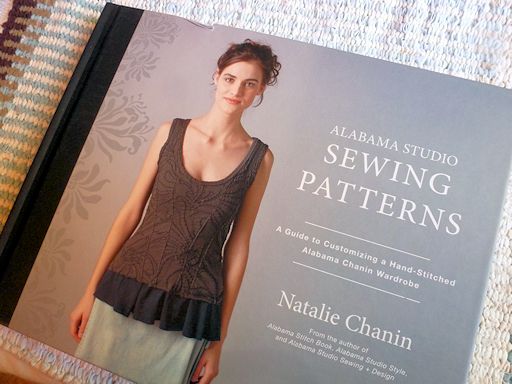
Let us talk of other things like, say, the two sewing books I got in the post yesterday. The first one is Alabama Chanin Sewing Patterns:


It includes a CD with all of the patterns from all three of Natalie Chanin's books (including this one) in a larger range of sizes. Yay! The book discusses how to fit your body and several different ways to modify the styles as well as showing many examples on different body types. I've been wanting to make a Chanin-esque tunic/dress for quite some time and this may just be the inspiration I need to get going on it.

The slightly sad thing is the book was damaged in the mail. Ouch! I'm not going to bother returning it though. It's still perfectly readable and I did check that the CD remained intact.


Next we have the latest Palmer/Pletsch publication Knits for Real People by Pati Palmer and Susan Neall.


The cover is rather dated-looking, I guess to follow the design of the other books in this series. (And is that Pattern Review's Deepika I spy?) However the interior is full of photos, tips and info from many well-known sewists including Marcy Tilton. The inspiration patterns even include many of the ones I already own! (Whether or not I've sewn them yet is another question.) It's going to be an excellent addition to my sewing library and a good reference for my Craftsy class with the Tilton sisters. I sew a lot of knits, probably at least 2/3 of my output, and they are always my go-to everyday garments. Can't wait to read both of these new books cover to cover!

What else? The weather has been really warm and sunny, for us anyway. My basil has done the best ever for me in its planter box on the upper deck. It was getting so tall and luscious that I had to harvest a bunch to dry for later. I always hang drying herbs on my cupboard doors in the kitchen:


The rest of the garden is growing pretty quickly. I'm still picking lots of "greens and reds" though these cool weather things are starting to bolt in earnest in the heat. We're getting raspberries and peas. Little cabbage heads are forming but I've mostly only been getting male flowers on the squashes yet. I try to help them along with my handy paintbrush when a female flower opens. Floral artificial insemination. Heh.

In knitting news I'm working alternately on the collar and the sleeves of my Alpaca Tweed Cardi. The sleeves are knit separately, partially flat and partially in the round, and then stitched into the armholes. In the heat of the afternoon it's nice not to have a heap of very warm alpaca in your lap, let me tell you! The collar is knit onto the body of the sweater using short rows. Instead of following the instructions to pick up stitches as you go, I picked them all up first. Much easier and I was able to make sure I had the right amount of stitches evenly picked up over the collar area. The only other difference was that I needed to wrap and turn on each short row (not specified in the instructions) or there were holes. But since the wraps don't show I don't need to pick them up on the return. It's kind of nice to have enough experience now to be the boss of my knitting! Saves a lot of grief getting stuck when things don't work out or aren't clear in the pattern.

I'll leave you with a couple of fun photos from last week. We took Thom's mom out to lunch at the Shaughnessy Restaurant at VanDusen Gardens and then went for a slow stroll around part of the garden. This poor beast is the Minotaur and the Blue Hare by artist/sculptor Sophie Ryder. He seems to have lost his blue hare somehow. I was trying to console him:


Wednesday, July 30, 2014

Done and Dusted

I did it! (I sound just like the Littlest Grandbeastie, Rosebud, there. Heh!) I finally and with Great Perseverance have finished:

The Surprisingly Difficult Waffle Weave Tea Towels

clip_image001

Date Begun: June 22, 2014
Date Completed: July 29, 2014

Project idea: from “All-Purpose Waffle-Weave Towels” by Marilyn Murphy, from Handwoven’s Design Collection 18: A Treasury of Towels.

Warp Yarn: New World Textiles 16/2 hemp/cotton, 55% hemp/45% cotton, natural (off-white).

Stripe Yarn 1: Blue Blazes (hemp/recycled blue jeans cotton) from New World Textiles, light denim blue, handspun on the brass tahkli and plied on Louet Victoria wheel, approximately 2/8.

Stripe Yarn 2: Organic cotton from Sally Fox, New Green (natural green), handspun on the brass tahkli and plied on Louet S-90 (?), a little finer than 2/16 cotton. Simmered in soda ash solution to bring out and stabilise the colour.

clip_image003

Warp length: 4 yds (4 towels @ 30” each plus loom waste)

Warp width: 20”, 601 ends sett at 30 epi (2 per dent in 15 dent reed) plus floating selvedges

Weft: same as warp. 2 towels woven with plain hemp/cotton and 2 with stripes at each end.

Partial Draft: 

WaffleWeaveTowels draft

Finishing: Towels were cut apart, hems pressed, machine stitched with the same cotton sewing thread as used for the hem weaving. Finally machine washed and dried, both hot.

Comments: The original pattern used New World Textiles 10/2 organic cotton sett at 24 epi. My yarns were finer so I sett them closer. That was a good call, at least for the natural hemp/cotton.

I had GREAT difficulty with this project! I had to separately weight the jeans/hemp yarns, spritz frequently with water and slather everything with flax-seed sizing (aka snot!) to make them behave. Still ends broke constantly! (Mostly the jeans/hemp on shafts 1 and 4 which didn’t interlace as much as the other ends.) Lots of repairs to make. The last towel was 2.5" short but didn't want to chance trying to weave further. The shed was getting very small because of the heavy weights hanging off the warp bar. I even had to make string slings up to the loom frame to support the bar near the end.

After cutting off the loom it took 2 long sessions to finish repairing all the broken ends. However, the final results are quite lovely! They feel soft but crisp at the same time and are very absorbent. The finished towels ended up 14.5” wide by 23” long (except the last one which was only 20.5” long) – a nice hand size. You can’t even tell that the tension was wonky and there are many repairs in there! The hems are not too rippled and are in scale with the rest of the towels. I guess it was worth having nearly INFINITE patience with these things! I think I deserve a medal for sticking with it despite everything that went wrong.

I currently have the littler towel hanging in the bathroom and one of the others hanging on the oven door handle. In use already! Surprisingly, now I want to weave another project! Hopefully a much quicker and easier one. I even have it all picked out and ready to start. Kind of like getting back up on the horse that threw you, right? More on that soon.

Meanwhile, I want to tell you about 2 of the new books that I got. They are kind of related, both of them being about natural dyeing. First up, we have the latest by Jenny Dean:

A Heritage of Colour

This is quite a small book but it’s packed with really interesting information on the dye plants that have been used in Europe, in particular Great Britain, for hundreds of years with great success. Jenny is a really good writer and has a way of making the complex subject of natural dyes accessible for nearly anyone. Most importantly she combines the necessary information with encouragement to do your own experimentation. I find it the perfect middle ground between the rote “follow this exact recipe” and the airy-fairy “try anything and see” approaches. I’ve learned a lot from all of her books and this one is no different. The text is pretty dense so reading it carefully is most rewarding.

Unfortunately, I was a little disappointed with the repetition of much dyeing information that is already available in her earlier books. Though I suppose it’s really helpful to have it all in one volume especially if this was your only source of information. Jenny explains everything you need to know succinctly but thoroughly. Included this time is info on contact dyeing (sometimes called eco-printing) and on using lichens and fungi. The fibre of choice for the dye samples in this book is wool, including dyeing over natural shades of grey and brown wool. The abbreviations used in the photo captions were somewhat annoying until I finally found the key in the text on p.48.

I haven’t quite finished reading every word yet, but I’ve already discovered a couple of dye plants from my garden that I haven’t tried including buddleia and willow. And I’m quite excited about the 1-2-3 vat (aka the lime/fructose method developed by Michel Garcia) as used with woad (powdered extract). I have yet to experiment with this. Ah, so many plants – so little time!

The second book I got is this one:

A Garden to Dye For

The author here is a garden writer as well as a hobby farmer who includes fibre animals with her plants. Chris lives in Placerville, California, so she has a more North American viewpoint including woad as a noxious weed! However she has done her dyeing homework. The result is a gentle and easy to understand introduction and even though Chris insists she’s not scientific, there’s definitely enough clear info to be useful. This book will help even a beginner dyer get good results from plants that you can grow in your own yard and Chris happily gives reasons to play with the more fugitive colours, such as for dyeing eggs or play-dough. There are also instructions for watercolour dye paints, play silks and eco-dyed scarves as well as the usual fibres and yarns.

This little hardback book is a lovely production with lots of enticing photos and an interesting layout. It could benefit from a more comprehensive index rather than just the plant names though. Otherwise I thought it was pretty comprehensive as a way to get started with natural dyes and, as I already do, to grow them in your own dye garden. I enjoyed Chris’s personable friendly style.

Both Jenny Dean and Chris McLaughlin are careful to discuss environmental and safety issues in their books. This is a quite different approach to the “olden days” when natural dyers were flinging around the more toxic mordants and using the less nasty ones in much higher proportions than necessary. My Guild has even gone so far as to put a disclaimer sticker in all the older dye books in our library as a warning that the amounts and types of mordants are not now considered environmentally safe. We live and learn, right? Assuming we survive our original follies!

I have several more books and videos to review. More soon! Right now I’ve got dinner to get. Hungry…

Wednesday, November 06, 2013

Still Here!

Yeah, I know! It’s been a ridonkulously long time since I posted last, hasn’t it? My excuse is that I’ve been very busy. My sister D is visiting from Haida Gwaii. She’s taking 2 back-to-back classes at Maiwa Symposium with Carol Soderlund using Procion MX dyes. At the same time she’s had many periodontist, chiropractor and hair dresser appointments, gone shopping for clothes (both high end and thrift), investigated Granville Island shops (including Maiwa Supply), and nearly melted her poor credit card. And we haven’t even gone to the Circle Craft Christmas Market at Canada Place yet. That’s on the agenda for Saturday. Whew!

Learning where everything is and how to get around in an unfamiliar city is hard. T has been driving her as much as possible and I’ve gone with her on public transit a few times but D has also had to navigate the system by herself. She’s now the queen of the Seabus to North Vancouver after having taken it back and forth 3 times to the periodontist. Trying to jam everything into 10 days is making me tired just watching. She seems to be (mostly) having fun anyhow though I bet she’ll be glad to fly back to her sleepy island paradise on Sunday.

So I have nothing else exciting to report! Had a birthday, knit some, read some. Oh and I got a new book. (Why are you surprised?)

PattermakingMenswear

Peter of Male Pattern Boldness was very excited about this patternmaking text book from Laurence King that is specifically for men. His review is here and he does a much better job of it than I can so if you’re at all interested in patternmaking for the guys in your life, check it out. I’ve actually sewn quite a bit for T-Man in the (distant) past and am eager to do more. He actually wears his recent Newcastle Cardigan regularly so that’s a good incentive, no? I have a shirt in mind for him next.

Believe it or not, men are much easier to fit than women. More tubular; less contours. However they can be very particular about their garments’ styles, colours, fabric choices as well as fit. Except for the rare hipster it’s best not to push “stylish” on them. Even the guys who only wear casual clothes are not going to want anything too different from what they are used to wearing. On the other hand, in my experience if they like a piece it had better be durable because it will get worn to death and beyond. What a challenge! Love it.

Abruptly changing the subject again, I’ve mordanted a few silk scarf blanks in alum so D and I can play with eco-dyeing them on Friday morning before her last class. So hopefully I’ll have something more exciting to show next time.

Wednesday, February 20, 2013

New Sewing Books

I promised a bit of a review of the new books I bought with my birthday gift certificate. (My birthday is in November so it was well-marinated by the time I got around to using it!) The first one is the second in a series (and yes, of course I own the first one too):

Shape Shape 2

Shape Shape 2: Sewing for Minimalist Style by Natsuno Hiraiwa. This is the English translation of the Japanese book which came out in 2009. In this second book, Natusuno carries on with her collection begun in the first Shape Shape. The designs are quite timeless so nothing looks dated at all. It includes patterns for tops, skirts, scarves, belt and even a brooch. They are either in SML or one-size-fits-all, which of course leaves a lot of gaps in the sizing. At least the designs are simple enough to be fairly easily adjusted if necessary. The patterns are included in an envelope in the back and are the traceable format similar to BurdaStyle but much easier to see. Seam allowances are NOT included. Sewing instructions are in the typical Japanese numbered diagrams with corresponding cryptic instructions. They aren’t really difficult but I’m sure it makes a lot more sense if you have at least some sewing experience. It’s better than BurdaStyle though especially if you are better with illustrations than words.

The styles may be simple but most of them are quite ingenious and able to be worn more than one way. I particularly like at least 3 of the skirt patterns, including one that switches between a skirt and harem pants with a few buttons. Truthfully I don’t know whether or not I really suit the Japanese-style clothes, being somewhat more rounded than the usual small straight-figured woman these were designed by and for, but I love them for their comfortable fit and versatile wearing possibilities.

A lot of the sewing bloggers also like the Drape Drape books by Hisako Sato but they aren’t at all the same as Shape Shape. They are for slinkier knits and are quite challenging, both to make and to wear! Very avant-garde. So cool, but definitely not my style. And neither of these series are for pattern making – they include the patterns for you – so they are different again from the Pattern Magic books. Whew! Clear as mud now?

Because I don’t yet have enough books (!!!) on pattern making, I also received this new title:

PatternMakingPrimer

The Pattern Making Primer: All You Need to Know About Designing, Adapting, and Customizing Sewing Patterns by Jo Barnfield and Andrew Richards. I’m somewhat on the fence on this one. It has a succinct style with lots of illustrations but it just seems to attempt to cover way too much in too small of a space. Check out this list from the cover:

WITH INFORMATION ON
Tools and equipment
Seams, darts, and notches
Fabric considerations
Measurements, slopers, annotations, and blocks
Combining and dividing
Fitting and adjusting
Rub-off drafting
Adding and suppressing volume
Sleeves, collars, waistbands, and cuffs
Openings and fastenings
Finishings, linings, and facings
Pockets
Going pro and e-tailing

Several of those subjects are books-worthy all by themselves! Also the language is more “industrial” than “home-sewer” which might confuse some, though I personally kind of like it. This book actually is more like a text-book-in-search-of-a-class-with-instructor since so much of the information seems like it needs clarification and expanding to be really meaningful.

If you’re a brave DIYer, you could make a mini-sloper and play with some of the intriguing style changes by slashing and moving darts and opening tucks and pleats. There’s some hopefully clear instructions for sewing plackets, pockets, zippers and collars which could be helpful. There’s one whole section on the drape method for rubbing off a jacket. Tidbits and teasers all through! However I did find the chapter on going pro and e-tailing to be simplistic to the point of laughable. Luckily it’s only a few pages wasted.

I want to like this book but I’m going to give it a Definite Maybe. It’s not expensive. It might be just the place to look up something that’s not completely new to you but you just want a reminder on how something should work. On the other hand, if you really want to be a designer-maker I would skip straight to Kathleen Fasanella and Fashion Incubator for the real deal. Her book is the definitive version that blows The Primer out of the water. And no, I don’t own that one. I have no plans to ever make a business out of sewing.

I’ll save the last book for another time. I still haven’t read it all and I want to do a post on recent spinning publications anyway. Hold that thought.

Meanwhile, yesterday we had a leetle accident with poor Blodgie, the hot water bottle. Yeah, you knew it was coming, didn’t you? He was three years old and used a lot, especially this winter when we needed him nearly every night to warm up our cold bed. Luckily he didn’t spring a leak (and it was a very small one) until we were awake enough to feel it on our toes. The sheets got wet along with the mattress pad but the water didn’t penetrate down to our foam mattress. Whew! We managed to locate a replacement – and a replacement for the replacement (aka The Heir and The Spare) just in case. This one is red and slightly larger. It has a best-before date on it of 2017 so here’s hoping it lasts longer than the rather cheap green one. Now I want to knit a new sweater for it. The old orange one is rather pilled and a little too small though I’ll probably keep it for The Spare after a shave and a wash. I’ll probably use the pattern that I developed for Stargazer’s Blue Blodgie which is the same size. Now I need to locate some suitable yarn in the stash. Surprisingly I need about 250 yards of worsted weight but I don’t think it matters if it’s not superwash wool. It might felt a little but that should just make it cosier.

As I mentioned in the last post, we had a nice day yesterday so we went for a Long Walk downtown to Dressew. I wanted some more elastics and I managed to find some bra wires that are ostensibly the right size. They are definitely not as nice as the ones from Bra-maker’s Supply but they’re also only $.99 a pair and good enough for practise bra sewing. The elastic selection is a bit weird (as is all of Dressew really!) and although they have lots of interesting colours in narrow plush-back and fold-over styles there’s not a lot of matching colours nor much of any type of lingerie elastics in either black or white. No wonder all my sewn lingerie has mismatched elastics! Oh well. Nobody really sees it but me and perhaps T-Man who doesn’t care either. I did find a whole bolt of black powernet though and got a yard (only $3.00!) which should last a few projects. And naturally a few bits out of the remnant bins followed me home as well. How do they do that?

Monday, February 27, 2012

Trouble In Blogger-Land

This is just a quick post to say that many folks have been having issues with Blogger’s “new improved” captcha to foil comment spammers. I am one of those who have trouble reading the so-called words that you have to type and it adds considerable time and difficulty to what should be a straightforward comment post. Yuck. So I have decided to join the movement to Go Bare and have taken off my word verification. We’ll see how it goes. If I get more than a few spam comments, I may unfortunately have to reinstate it. I’m hoping for kindness and consideration – and world peace and an end to hunger and cancer too, while I’m at it! OK. We can only hope, huh?

Meanwhile, I’m doing the Happy Dance! I got a couple of new books in the mail. The one I am most excited about is this book:

perfectfitting The Complete Photo Guide to Perfect Fitting by Sarah Veblen, contributor to Threads magazine and PatternReview.

This book has just been released and I’m wondering where it has been all my sewing life! The 650 clear photos are just so helpful. The essence of Sarah’s technique is to make a muslin, try it on, make necessary changes and then transfer the changes back to the pattern. She focuses mostly on the bodice since of course that’s where most garments (tops, blouses, dresses, jackets and coats) begin. Less space is given to skirts and pants fitting - though I’m sure you could easily expand pants into another whole book. However, what I like best is Sarah’s inclusion of why fitting issues happen and the reasons we need to learn to “read” what the cloth is trying to tell us. She maintains that you can’t do that as well using just the pattern tissue.

I’m truly wishing for a good sewing buddy now since you can’t really use this method on a dress-form. And a bolt of muslin would be helpful too. And here I was always trying to avoid making muslins! Maybe a necessary step towards my goal of pattern independence? I can totally see myself haunting the cheap fabric section for super-bargains now.

The second exciting addition to the library is this book:

PrinciplesKnitting The Principles of Knitting by June Hemmons Hiatt. Revised and updated.

I’ve been trying to get hold of a copy of this book ever since I saw it in the public library back in the day. I couldn’t read the whole thing in one lending period or even a couple of renewals! Besides I knew I would want to refer to it often. Unfortunately the original went out of print and became a legend to the point where copies were going for astronomical sums on eBay. I’m so glad that June was finally convinced to recreate, revise and update her work for us oldies who remember it as a treasure-house and also for a new crop of inquiring knitting minds.

This is like the Encyclopaedia Britannica of Knitting at over 700 pages. The style is still a little old-fashioned because it’s only illustrated by a sprinkling of black and white photos and drawings. The text on the other hand is super dense! June doesn’t just tell you how to do something, she tells you when, where and why. This is the key to this book’s appeal to the more academic knitters and designers who want to go beyond just learning a new technique. However I wouldn’t really recommend it for visual learners or those who just want to see how to do a particular stitch. There are much clearer and simpler books with more illustrations for that. My go-to favourite is Montse Stanley’s Knitter’s Handbook. (My copy is the older-named Handknitter’s Handbook and complete with Post-It notes.) And of course there’s always the Internet and You-Tube with videos. Principles is a much chewier meal! And it’s going to take me a number of sittings to digest what this book has to offer. Oh yum!

Tuesday, January 24, 2012

Patternmaking Books In Review

Today, kiddies, I’m feeling like a discussion on patternmaking (aka pattern drafting or pattern cutting) and pattern fitting is in order. As you all know (or are beginning to suspect) I have a lot of books. Also way back in the Dark Ages I took sewing and pattern drafting classes, so I think I’m a little bit qualified to comment though I am reminded why I quit sewing when things weren’t working out so well. However I recently feel that my understanding has undergone several quantum leaps. I’m re-energised and really enjoying my return to garment sewing. All because I’m now finally getting the kind of results that make me happy. Now if only I could get my young skinny-minnie body back. Sigh. Oh well.

No, I was not inspired to take a new patternmaking course. I figure that the amount I have spent on books is actually less than that would have cost – plus I’d probably still need to buy books anyway. Also I have discovered that no one single source has all the information that I need to really comprehend the techniques. There are a lot of publications out there, particularly new ones with good photos and illustrations, that really helped my understanding. The advances of the internet search engines and the generosity of sewing bloggers with their tutorials have also contributed. And let’s not forget PatternReview, BurdaStyle and the Stitcher’s Guild Sewing Forum online. Just ask and someone will answer. Resources that I sure didn’t have back in the day.

I’ve found that sewing books come in several categories. There are the ones that are trying to inspire you to get started making your own clothes, with included patterns or cutting diagrams and garments that have relatively simple lines and fitting. These are great if your body shape and style are compatible. Some titles are Design-It-Yourself Clothes by Cal Patch, Twinkle Sews by Wenlan Chia, I Am Cute Dresses by Sato Watanabe and Simple Modern Sewing from Shufu To Seikatsu Sha. There are lots more coming out and many are translations of Japanese books. The drawback is that if you have a larger figure especially in the bust, there will be issues. You need to learn how to fit the garments to your body and decide whether the style will look good on you. These issues usually aren’t discussed in any depth in these titles. More research! Always.

If the simple garment approach isn’t working for you, then you need to deal with more complex patterns. Patternmaking for a Perfect Fit by Steffani Lincecum uses existing garments to create a pattern that you can then play with to get different garments. How to Use, Adapt, and Design Sewing Patterns by Lee Hollahan gives you instructions on adjusting commercial patterns or creating basic blocks to then manipulate further. Working with commercial patterns is also the main focus of a number of fitting books. The ones that work best for me are Fit For Real People by Pati Palmer and Marta Alto and Fast Fit by Sandra Betzina. Other older but excellent ones are The Perfect Fit from Creative Publishing International and Fantastic Fit for Every Body by Gale Grigg Hazen.

You really need these fitting skills because the industrial-level patternmaking books don’t actually consider body shapes outside the standard ones. The first book of this type that I bought back in the 1980’s was Metric Pattern Cutting by Winifred Aldrich. (This book is still available, updated to the 5th edition.) Although the styles are dated in my copy, the information and the many line drawings are very helpful in seeing how the basic measurements work to create blocks (slopers) and thence how to go from there to get different styles. Of course that still wasn’t enough information for me so I recently bought the large and expensive Patternmaking Made Easy (Second Edition) by Connie Amaden-Crawford. This book is a college-level course in itself! And well worth the outlay. But then I heard about a new book that seemed really interesting and perhaps a good balance to Connie’s. It also got good reviews from others in the business.

PatternMaking book

Patternmaking by Dennic Chunman Lo in my opinion is quite fabulous! Artsy cover dress aside, it has a more organic and holistic perspective on what can be a pretty dry exercise – even while the focus is on building skills for the fashion industry. I’ve really only read about half the book so far and already had several ah-ha! moments. Yes, there are standard measurements but the mathy bits relate to them in a way that can be extrapolated to different sizes. There are practical applications and there are also inspirational (or what I consider fantasy) garments. There’s even a chapter introducing CAD-CAM pattern cutting. This book may not include everything you might want to know, but it does explain why better than any other text I’ve seen.

Lastly there are the books exclusively for “inspirational” patternmaking: Pattern Magic, Pattern Magic 2 and the soon-to-be-released Pattern Magic: Stretch Fabrics by Tomoko Nakamichi. These books document amazing imagination and skill in creating flat patterns for unusual garment shapes. Pure fun.

As I’ve mentioned before, I’m trying to free myself from the limitations of the offerings from commercial pattern companies. Not only do they not fit correctly, they are mostly very far from my style. So far I’m finding my new personal blocks are truly time-saving devices! My next effort is to reverse-engineer my shoulder princess blocks back into a regular darted bodice and skirt. It’s actually not hard. After that I will need to break down and finally make an actual muslin to test it. And then on to…gulp! Pants! If the worse comes to worst, I always have my favourite pair of yoga pants to trace. Heh. Yes, I believe in cheating. OK, it’s not cheating. Whatever it takes to get the desired results. Tracing, frankenpatterning, drafting, tissue paper confetti. I’m all over it.

Tuesday, July 12, 2011

Today’s Review: Copying Clothes

Man! I’m exhausted. After having the larger Grandbeasties yesterday for the second time in 3 days, I’m taking it a little easy today. Now I remember why I had small children when I was in my 20’s! I had a lot more stamina then. Or maybe I just had no choice but to hang in there even when I was tired? I didn’t have handy grandparents who would take over anytime I wanted, T-Man was working 50+ hours per week and we didn’t have enough money to hire a babysitter very often. Am I trying to compensate for that and be there for my grandkids the way I’d wished for myself? Don’t get me wrong – I adore the beasties and absolutely enjoy having them. I’m just not up for it every day even with Grampa T-Man’s help. Luckily it usually works out to having them over Just Often Enough. We miss them if we don’t see them at least every couple of weeks.

So of course I haven’t accomplished much of anything else, particularly in the crafty department. I got a partial row knitted on my Black Rock Shawl and got interrupted by a child’s request and there ya go! That was it. I got a little more done on my newest knitting project, mainly because it’s mindless stockinette:

Amiga_beg

This is my version of the Amiga cardi from Knitty in a doubled slub rayon weaving yarn. It’s much farther on now than this photo from the other day. I’m down a number of inches past the armholes and cruising for the hem – which is just a bind-off row because it’s just plain knit all the way. I plan to make it a little longer than the waist length the pattern shows. Then on to the 3/4 sleeves and a large collar/front piece that is just a long rectangle. Easy-peasy. This is my mindless knitting for the moment since the shawl is halfway through the lace chart and needs more attention. Also I need to dye this sweater in something from the garden, likely either woad or Japanese indigo, and it needs to be completed first before I can do that. The black wool/silk shawl can wait although I haven’t actually stopped working on it entirely. It’s definitely not too warm for wool today!

I think I did promise something more interesting to talk about however. Let’s have a book review, shall we?

Patternmaking Book

Patternmaking for a Perfect Fit: Using the Rub-Off Technique to Re-Create and Redesign Your Favorite Fashions by Steffani Lincecum (2010, published by Watson-Guptill).

I got this book recently because I have a number of garments in my stash that I would love to re-create. I’ve done this before, pinning and tracing and then truing up the shapes and adding hems and seam allowances. It works pretty well if you can get the piece flat enough. The author describes 2 methods : the paper method and the fabric method. The later is used for more 3-D items that can’t be flattened, in this case a purse, where you drape around the piece. The flat paper method is used for a pencil skirt, a 1960’s sheath dress and a vintage blouse. Then there are descriptions of how to alter the basic pattern “rub-off” to change the fit and/or style options. Interspersed are helpful hints and tips plus some basic sewing instructions to assemble the garments.

What I liked:
This book starts out quite well with a lot of helpful information. This technique is a great way to duplicate a favourite closet item and either make a similar garment, tweaking the fit if necessary, or morphing it into a number of different styles. Anything that gets you away from using the popular pattern companies’ rather boring offerings is all to the better, IMO! The styles shown are cute and quite wearable if you want to copy the ideas – providing you can find a similar garment to start with. Some of the sewing hints are very detailed, such as how to hand-finish a lapped zipper for a couture touch. I particularly liked Steffani’s explanation of the way she handles adding the darts to your tracing which is kind of an important part of the puzzle.

What I didn’t like so much:
As most often happens, for me at least, I feel that some information is overly detailed, some is skimmed too lightly and some is missing altogether. Perhaps the author could have used the available space for more detail on the pattern tracing and alterations and less on the sewing? One could always refer to a good sewing book for those details but the how-to’s for duplication of a garment isn’t something that’s discussed very often. Only featuring three garments and one purse to copy seems like a very small sampling though there are quite a few “refashioned” garments shown for each one. I’d rather see more different garments rubbed off and less restyling, some of which stray rather far from the original which is used more like a basic block than a pattern which is a whole ’nuther subject, aka pattern drafting. Altering for fit is barely skimmed, probably because she expects you to start with a garment that fits pretty well and there are a couple of good fitting books available for that if you need it. I’m also not really happy with the illustrations of pattern pieces and layouts which seem rather vague to me. A lot of space is wasted, for example with not one, but two large drawings of how to link two buttons to make cuff-links just a few pages apart. I’d rather see how the skirt sections of some of the dresses are made instead. The focus is on the bodices only. More detail photos in general would have been very helpful even for the more experienced sewer like me. This book isn’t really for the absolute newbie.

Besides my rather minor complaints, which may have been beyond the author’s control anyway, I have no regrets buying this book. I especially enjoyed the stories about the author’s adventures in making clothing for TV and movies. Plus the tale of finding her great-grandmother’s old newspaper patterns gave me goosebumps. It illustrates that there is nothing new in wanting to make a garment like one you already own, only better! These days it’s not so much about thrift as it is about creativity. I’m inspired to get off the computer now and up to the studio.

BTW there is a more complex garment rub-off tutorial (originally from Threads #92) here. Turns out the authors Blossom Jenab and Kate Rittenhouse are local folks too! Small world.

Tuesday, June 21, 2011

Sustainable Life

I’ve been reading and hearing a lot about “sustainability” but I’m totally confused about what that really means. One definition (from Wikipedia) says “Sustainability itself is expressed as meeting present ecological, societal, and economical needs without compromising these factors for future generations.” It all sounds lovely. Can we in this severely overpopulated world actually live this way? Truthfully, I don’t think many people are willing to give up a lot of their 21st Century perks and really do what it takes to achieve this noble goal. It’s particularly difficult while others seem to be exploiting the planet and the population like crazy just to get rich on the profits. I’m not really a very philosophical or navel-gazing type of person. I just do what I do and carry on as best I can. Of course it’s not enough – but then nothing ever is, is it?

But I never cease to be amused by people hopping on a new bandwagon. If it’s a good thing, go for it! More power to ya. You do need to think things through a little better though before you blindly follow the crowd. (Just ask those morons at the recent Stanley Cup Riot who are now apologising left, right and centre because they joined in the insanity! Doh.) In our own little corner, we’ve been shopping with our own bags and boxes for at least 20 years only now we don’t get funny looks from the cashier. We’ve had a veggie garden for nearly 40 years, ranging from a strip of dirt under a window to boxes on a flat garage roof and currently to nearly 1/4 of our city lot plus nut trees and berry bushes and don’t forget the dye garden. We have a huge compost box. Also I’ve been making at least a portion of my wardrobe since I was a teenager and then some of our household textiles too, incorporating all of the textile arts as I learned them: sewing, dyeing, spinning, weaving, knitting, crochet, rug hooking. T-Man fixes things and keeps them working as long as possible. We use stuff until it wears out - and then often we continue use it some more until we get around to replacing it. And so on and so on. Blah-dee-blah-dee-blah. Is this all sustainable in a global sense? Don’t think so. Not even close. However I believe that every little bit we can do does help somehow. I’d still do it all anyway.

Yet we are all bombarded day and night with advertising that tells us we need to have the latest and greatest whatevers to be happy and fulfilled human beings. The news is full of doom and gloom about how businesses are failing and the economy is tanking and we all need to buy-buy-buy to save it. I don’t know about you, but I pretty much have enough “whatevers” and don’t have room for more. It’s mostly lies anyway. I don’t “consume” enough to support the economy the way it’s currently set up and don’t really want to. It’s a terminally flawed system. Of course it’s going to hurt bigtime to fix it, if it can be fixed at all. I have no useful ideas on that. Probably it will just have to break badly first. Finances and big business makes my head hurt so I’m not even going to go there.

Meanwhile let us just discuss a new book I got:

image

Harvesting Color by Rebecca Burgess is the latest book on natural dyes. It’s quite good actually. Rebecca is a textile artist and educator and she seems to walk the walk as well as talk the talk. Her focus is to use dye plants from your local area – hers is northern California – in a (here’s that word again) sustainable way. There’s a lot to ponder here. Plus she has much clearer instructions (or at least I understand them better) for some of the techniques of wrapping and steaming, flower pounding and indigo fermentation vats. There’s lots of lovely pictures to accompany the information. Though one photo labelled “black walnut” (p.84 although unnumbered) is actually Persian walnut (aka English walnut or Juglans regia). The leaves are rounder and the nut husk is speckled. (Sharing my backyard for 31 years with a tree that’s at least 50 feet tall now, I think I’m qualified to identify the species!) There are other photos of actual black walnut to compare the pointier leaves. Both types are excellent dye sources anyhow. Mistakes happen, but I hope there are no other errors especially in the recipes, which are the most important to get right.

Rebecca has loosely organised this book in “seasons” which, although it has a lovely flow, makes it hard to find certain pieces of information. For instance a short discussion on Navaho-Churro sheep is in the Summer section, flower pounding is in the Spring and wrapping leaves in fabric is in the Fall section. Similarly, Japanese indigo is in Summer and indigo fermentation is in Winter. You’ll need to make good use of the index. And probably a few Post-Its to find the elusive tidbits.

There are a few handspun and knitted projects included but they are pretty clunky and basic – like the ones I produced in the 1970’s when I first learned to spin and dye. Sometimes I wish I could spin that lovely bulky yarn again! I’d have to practice a lot and probably need to use my old cottage wheel to do it. Might be a fun exercise some day anyway. I remember it sure uses up the wool stash faster anyhow.

So I’m still in the process of reading and evaluating the rich information contained in Harvesting Color. Do go check out Rebecca’s website (linked to her name above) and her blog has a great post on her local Fibershed project’s fashion show. No fair that Sally Fox (of coloured cotton fame) is included. Cotton doesn’t grow in my area! The idea of a fibreshed (sorry, Canadian/Brit spelling) is an interesting one though: bioregional clothing akin to the 100-mile diet. Around here I’d be wearing a lot of dog fur however since it’s the most common fibre grown in my vicinity. Unfortunately those little yappy toy mutts don’t produce much.

Tuesday, March 22, 2011

Sock Book Reviews

But first – my faithful reader Ev asks what is the tool that I showed in the last post. That, my dear, is a fringe twister! You attach your strands (or groups of strands) from the end of your woven scarf or shawl to the alligator clips. Then you wind the handle like mad in one direction. When the ends are twisted enough you shift them all onto one clip and wind like mad in the opposite direction. Make an overhand knot at the end to hold the twist in and there you have a nice tight scarf fringe. You can even count your windings to increase consistency. There’s an illustration and a brief description on this PDF from Leclerc and a somewhat more elaborate tutorial on this PDF from Ashford. Note that Ashford’s twister clamps to the table but is otherwise quite similar. A clamp would be especially useful for making cording. Hope that helps!

Now for the promised book reviews. As I hinted yesterday, there’s a definite theme here: socks! Which is odd because although I love all the fantastic sock patterns out there, I usually only ever make plain stockinette socks using my standard memorised pattern. Boring but easy to knit on autopilot and terrifically functional. Be that as it may, here’s the latest additions to my vast book collection:

Book KneeHighs

Knitting Knee-Highs by Barb Brown, published by Krause Publications, 2011. Signed by the author! (She was actually at FibresWest this last weekend but I didn’t meet her. The Twist of Fate booth where I bought it got her to sign copies for them.) Barb is from Alberta and has had her sock patterns published in a number of publications. This book is a great resource even if you aren’t interested in knee-socks since each pattern has a short sock version as well. Most are of the stranded 2-colour pattern variety, similar to Turkish or alpine ski socks, but with my favourite flap heels and wedge toes. There are several lovely cables and lace patterns as well, including one that reminded me instantly of my last pair of Monkey socks. (Turns out it was in exactly the same yarn!) Best of all, there is a section in the beginning that includes formulas for calculating your own knee-highs, custom fitting tips and details on how to convert to shorter socks or legwarmers.

I have a few small caveats with this book. I wish Barb had included more details on the different places one can put the “calf wedges” (my term) when designing and also that all the knee-socks pictured seem too short to me. I like mine right up to the kneecap and the photos mainly show them ending right at the widest part of the model’s calf or a teensy bit above. I totally guarantee they will not stay up that way! That problem could be easily remedied with some of the patterns by adding more repeats above and below or even incorporating the shaping but others such as the ones with large colour-stranded charts would take a lot more finagling. It could just be my personal taste and you might be happy with the length as written. However, to Barb’s credit she does include several sizes for each sock pattern which is not all that easy to achieve with some stitch patterns. I also like many of the alternative shorter versions though it seems a little backwards to discuss changes from long to short socks. Might have been good to add how to do it in the opposite direction, i.e. the changes that need to be added to a short sock to make them into knee-socks. Then you could adapt almost any sock pattern. There are really not very many knee-sock patterns out there in comparison.

Book CookieASpeaking of mostly regular-length socks, the second book I got (this time from Jane Stafford’s booth) is adorably entitled knit. sock. love. by Cookie A, published by her own One Leg Press, 2010. This is a gorgeous book! The photography by Laura Kicey is spectacular and totally negates the fact that you’ve probably seen a number of these patterns before. However, Cookie has added several sizes to most (such as the familiar Hedera and Monkey socks) and included clear diagrams and instructions for each sock pattern. It pays to be your own publisher because you can get the book design the way you want it! I’m a huge fan of Cookie’s elegant design style using lace, cables and traveling stitches – no colour-stranding here. Plus there are a few knee-socks included. Love. Sock. Knit.

If you’re a rank beginner or a sock knitter who prefers toe-up short-row heel styles neither of these books may be right for you. The authors don’t give directions for alternative needle or style options nor hold your hand with basic sock knitting techniques. Both use charts extensively. An experienced sock knitter could probably adapt at least some of the designs to their preferred method. I know I’ve done that in reverse with at least one of Wendy Johnson’s toe-up sock patterns. Hint: lace patterns often look quite different when knitted upside down or in reverse order. Ask me how I know.

Anyway now there are several pairs of knee-socks in both books that are calling me to get my needles out – especially since I don’t have any socks on the go at the moment. After all, although I have many pairs of handknitted socks I only have 2 pairs of rather plain knee-socks. However I’ve been monogamous with my Abotanicity Tunic (also in sock yarn) and it’s now several repeats into the lace section and looking good so far. I didn’t change needle sizes upward yet though I’ll probably ease up to a 3.5 from the 3.25mm soon and then go to the specified 3.75 further down on the skirt. I can only read while knitting the alternate plain rows and must concentrate on the 294-stitch lace rounds! I’m just coming to the end of the second 100g ball so I’ve already knit the equivalent of 2 pairs of large men’s socks or a pair and a half of knee-socks anyhow. Onward…before it’s too warm to wear a wool tunic. Ahem. I wish. Although it must be spring because T-Man rode his electric-assist bicycle to work for the first time this year. But then it hailed on him on the way.

Thursday, February 10, 2011

Colours To Brighten Your Life

It’s a beautiful sunny and not-too-cold day here – and I have a migraine. Bleh. You just can’t win sometimes. I’m currently waiting for the ibuprofen to kick in. Meanwhile, first I’ll tell you about yesterday’s sojourn at Children’s hospital with Milady Daughter and grandbaby Rosebud. And maybe later we’ll have a Book Review. Haven’t had one of those in ages!

So this was the second time for the full spate of tests for poor little Rosebud. These are necessary for the study she’s in involving Botox in the treatment for club foot. We got to hear her really angry cry during the ultrasound of both legs, the good one and the (formerly) curly one. She hates to be on her tummy unless she can be on a warm human chest! A hospital examining table just doesn’t cut it. And messing with her sensitive foot as well. Not happy. No uncertain terms there.

Then we got her soothed and the loaded diaper changed and next it was on to the x-rays. This time at least the radiologist didn’t strap her so tightly but instead let mommy (wearing a lead apron) hold her foot still. Unfortunately she didn’t like this procedure much better than the ultrasound. I think it still hurts to press her foot down flat.

More soothing while I carried Rosebud and finally joggled her to sleep in my arms. Ortho-doc used that opportunity to photograph the legs and feet while she was still. Unfortunately then they had to do more measuring which meant she woke up when I put her down on the table. And decided she was famished. Doc said to hold off until the casting because she wanted her hungry enough to drink her bottle during the procedure. But first the Botox injection (the real thing this time) and I was wishing I didn’t have my hearing aids on! Poor thing was so outraged at the mean trick we played on her. Doc even spent time rubbing Rosebud’s leg with shea butter herself because she felt bad about sticking her. So sweet – but really it all can’t be helped. We all know that except for the poor baby!

The casting went uneventfully. Rosebud was happily sucking on her bottle and paying no nevermind to the wrapping. Again. Possibly only two more casts and then on to the boots-and-bar. Oh joy. Oh, and we managed to get her weighed: 6 kilos. That’s over 13 lbs now. Happy chubby baby. When we aren’t sticking her with needles that is! All-in-all it took nearly 3 hours to get everything done that needed to be done. Whew. I don’t know about Rosebud and her mommy but I was pretty worn out afterward.

So now how about a Book Review? I got a couple of new books the other day. Haven’t managed to read them all yet but this one is a fairly quick read:

MiserBook

The Knitter’s Guild to Hand-Dyed and Variegated Yarn by Lorna Miser, founder of Lorna’s Laces, published by Watson-Guptill Publications. The subtitle “techniques and projects for hand-painted and multicolored yarn” gives it away. If you’ve ever had trouble with streaking, pooling and other unique features of these yarns then this is the book for you.

The first chapter looks at multicoloured yarns and how to determine the repeat sequence and if they are muted or bright. This is really useful information for both commercially dyed or printed yarns and for those lovely hand-painted yarns, whether purchased or dyed yourself. Chapter Two has ways to blend mismatched skeins and there’s two patterns, a tunic and a shawl, that illustrate some of the solutions. Chapter Three talks about breaking up the colours with texture stitches and concludes with patterns for mittens and a child’s cardigan. Chapter Four features slipped stitches with patterns for a man’s vest and a small coin purse. Chapter Five is tucked stitches and the patterns are for placemats and a ladies top. Chapter Six investigates float stitches and follows up with patterns for a neck cozy and socks. Chapter Seven shows how to add solid colours with the variegated ones and illustrates with a hat and a cardigan pattern. Chapter Eight goes further with solids and stripes and features a baby sweater and a throw. Chapter Nine explores fair isle (stranded) patterns and has patterns for a ladies vest and a fulled (felted) laptop case. Chapter Ten is the one we’ve all been waiting for: lace. It includes patterns for fingerless mitts and a shawl. Chapter Eleven mixes weights and textures with a tote bag and another throw.

Throughout the book, Lorna has included many stitch patterns (65 in total) as well as ideas for their use and variations to try. They are both verbal and charted. Patterns for complete items call for yarns from many different manufacturers but I’m sure one could have lots of fun swatching and substituting one’s own choices.

This book fulfills all my wishes for a good knitting book: lots of clear technical information, juicy pattern stitches and patterns for items that I might really want to make. It’s a good addition to my copy of The Essential Guide to Color Knitting Techniques by Margaret Radcliffe, which complements and expands on some of the principles. Go forth and swatch.

I’m going to take another ibuprofen…

Friday, July 16, 2010

Body Image

Now that I’ve been hanging out with my buddy Debbie Double for awhile and getting to know her (and my) shape better, I’ve figured out a lot about where I’ve gone wrong in the past in trying to make clothes fit. It explains why I have trouble buying off the rack too. I have:

  • forward shoulders
  • sloped shoulders
  • slightly forward neck
  • C-cup (or maybe even a D?) bust
  • short arms
  • full abdomen
  • wide hips
  • sway back
  • low seat
  • short legs

Sounds pretty bad, huh? Of course much of this has happened to me slowly over the years. I’m pushing 60 after all! Unfortunately pattern companies can’t take into consideration all the various shapes that people come in so they draft patterns to fit the “average” body, whatever that might be. Almost everyone has some deviation from that “average” body. Even if we aren’t making our own clothes, it’s helpful to know our shape and what looks good on us. Be honest with yourself. Lumps and bumps are normal, especially as we age, and it doesn’t mean that you’re any less beautiful!

Unfortunately fashion magazines, TV and the movies aren’t helping anyone’s self-esteem by emphasising overly thin and muscular figures. Think of it as just the current fashion and fashions change constantly. If you go back to Marilyn Monroe, everyone’s ideal of sexy womanhood, she was downright fluffy compared to today’s popular shape! Don’t compare, just celebrate what you’ve got.

OK, so back to the fitting books.

I’ve found the best one finally! “Fit for Real People” by Pati Palmer & Marta Alto is definitely opening my eyes and my brain. Sandra Betzina’s “Fast Fit”, Nancy Zeiman’s “Fitting Finesse” and the long-titled “How to Use Adapt, and Design Sewing Patterns” by Lee Hollahan are good as far as they go, but IMHO they don’t go nearly far enough. I want details. I want why. Pati & Marta get full marks for clear illustration and explanation. Even repetition. You can tell they have taught many different women (because really they are discussing only female “people”) how to make commercial patterns fit their body, not some mythical standard. They understand what changes the years make to the female form and how to accommodate those changes. After reading this book I really feel like I finally have a complete set of tools to make clothes that fit me.

So what’s wrong with the other books, really? The one I’ve had longest (about 15 years!) is Nancy’s “Fitting Finesse” (published 1995). What I don’t like is her pivot and slide method and her more modern book “Pattern Fitting With Confidence” (2008) uses the same technique. It makes my brain hurt for some reason. I’d much rather tuck and fold, slash and spread, or even redraw the darn thing entirely. It’s just the way my brain works, not a diss. Otherwise, the book just doesn’t give me enough of the kind of detailed information I want. I’m greedy like that.

Lee Hollahan’s Book With The Very Long Title (published 2010) tries to fit too much in too small of a space. (Hmmm…maybe the title was a clue?) She combines basic fitting with pattern drafting, both of which are complex subjects and ultimately could fill their own book, sort of like the 500+ pages in Connie Crawford’s pattern drafting book. I found it very interesting at first but ultimately unsatisfying on both counts. Not enough detail for me. The photographs are very clear though. I like that part a lot.

Sandra’s “Fast Fit” (first published 2001, my softcover 2003)is all about the individual fitting problems and how to fix them which is great. Except that her illustrations of actually what to do are kind of vague and hard to see. The bodies are large cartoonish sketches and the patterns are tiny photographs. I would really prefer it be the other way around! She follows the wrinkles to decide what needs to be done and has her adjustments in two formats: “fast fit” (or the quick and dirty) and step-by-step. Sandra also recommends you make muslins or, as she terms them, “pre-tests”. She includes a lot more information than the first two books but it still seems somewhat unsatisfying to me. Is there any point in mentioning specific pattern numbers without either showing what it looks like (photo of the pattern envelope perhaps) or realising that it likely might be OOP by now? Sandra has great style herself however!

Of course you get a slightly different perspective from each of these books. The Palmer/Pletsch one (originally published 1998, second edition 2005, mine the updated 2007) uses tissue-fitting and doesn’t require a muslin pre-test. Though the nervous might not want to use the really expensive fabrics until they’re sure of the techniques. Like Sandra, Pati & Marta use the wrinkles to tell what needs to be done to make things fit. I’m certainly going to use their technique of reinforcing the neckline and armhole of closefitting patterns with tape. I’ve already experienced rips! I also like the way they pin pattern tissues down before taping thus maintaining perfect flatness. See? I’ve learned a bunch already. Three scissors up!

So why haven’t I done anything useful yet? Seems like I’ve been stalling for weeks, doesn’t it? To tell the truth, I’ve been feeling somewhat under the weather, blue in spirits and lately a couple of days with a tummy upset. My appointment with Dr Serious Dermatologist on Wednesday got me all stressed out. Now my psoriasis rates as serious, instead of mild. Lovely. I have to stop one of the ointments, use more of another, still with the black tar, plus take some nasty side-effect-laden pills. Pills, I might add, that cost over $100 for a month’s supply that Isn’t Covered At All by T-Man’s extended medical for some reason unexplainable by my pharmacist. Sheesh. They had better do something useful, that’s all I’ve got to say. Especially if I’m going to start losing what’s left of my hair and not be able to drink T-Man’s yummy wine now and for 2 months after I’m done with them. Maybe I’ll lose some weight? Be positive, damselfly.

I also have an appointment in August with the skin care centre to begin light therapy. Finally. (Apparently I lucked into an early date. Someone must have cancelled and left me a spot or it would have been November.) Maybe it will work better than the sun exposure I’ve been trying to get regularly. At least we’ve been having some nice sunshine recently.

Anyway, I need to print out this quote on a small card so I can hand it to well-meaning friends, relatives and acquaintances – all of whom know something that I should try:

“Allergies, infections, dietary deficiencies or excesses, or nervous tension do not cause psoriasis.” 

And on the other side it should say:

“Psoriasis is a chronic, non-contagious, lifelong immunologic skin disease. What works for one person with psoriasis might not work for another. There is no permanent cure.”

Since this body is totally not the image I want to see, I will envision it clear and normal - not all blotched, cracked and peeling. Be positive, damselfly. I guess that means my actual shape is not a problem?

Thursday, July 08, 2010

Be Careful What You Wish For

Silly me. I wanted it to be summer and now it’s SUMMER with a vengeance! Over 31C outside (that’s nearly 90F) and 27C in the house on the main floor. I don’t know what it’s like upstairs because I’m afraid to go up there right now! The temps are at least 15 degrees Celcius hotter than they were a week ago and records are being broken in the opposite direction. Maybe that will teach me to complain about how cold I was in the beginning of July? Probably not.

I spent the morning watering the front garden and the dye garden. Not the back garden because I did that last evening but it needs it again now along with all the planters. Sigh. Shades of last summer’s scorching. I spend most of my spare time watering stuff so it doesn’t all croak on me. At least the heat-loving things are perking up finally. I swear the blueberries were ripening as I picked them!

Blueberries

I already pulled out the garlic and it’s drying on the deck.

Garlic

It seems to be ok in spite of the rust, those red spots on the leaves:

GarlicRust

Unfortunately I’d better throw those in the garbage instead of the compost or the city yard waste bin. Otherwise I’m just spreading the fungal disease. In spite of it all, the bulbs look to be alright. We’ll see how they store – though I’m not going to be able to braid them like usual because the tops need to go bye-bye. I’m also going to have to look for some disease-free garlic at the farmer’s market to plant again. Though how will I know if they didn’t have the same problems this year that I did?

What else? Oh yeah. I got more books in the post today. Yes, I know. Damselfly The Fanatical Book-Collector strikes again. Call it retail therapy. Or something. I can afford it now so I’m indulging myself. Anyway, I consider it education and sometimes text books are needed. Right? Anyhow, I’m really enjoying these because they fill in the gaps that the Connie Crawford book left in my brain. How to make the patterns fit if I don’t have a standard body shape? The Lee Hollahan book is good, but I’ve discovered it’s nowhere near detailed enough for me. OK if all you have to do is a few minor changes but mine are anything but minor or few.

So I got this book:

BookFastFit

Sandra Betzina’s Fast Fit: Easy Pattern Alterations for Every Figure. And it seems really good so far. I like a lot of Sandra’s styles and the fact that she knows that everyone comes in their own special size. Her website is a little umm…hard sell. Not that I begrudge anyone from attempting to make a living but I likely won’t pay to get the webTV episodes. I personally don’t learn nearly as much from video – I keep wanting them to go faster and skip the stuff I already know. I can do that easier with a book. And books carry much more information in a way that’s easier to access at random. Videos are good though if you’re a more visual learner or for stuff that is hard to describe and you need to see performed to understand. But I digress.

The second book is this one:

book-fitrealpeople

Fit for Real People by Pati Palmer & Marta Alto. The ladies they are fitting in this book are definitely of all different shapes, sizes and ages. They step you through what needs to be done to a particular pattern to fit its intended body. I’ve only glanced through this one so far.

I have to say that the Palmer/Pletsch website is very helpful, particularly the free e-magazines you can download in PDF. Very professionally done with lots of helpful information.

The last book is back to Sandra Betzina again:

BookPSStepbyStep

Since I need some more up-to-date sewing information, I looked at this book in the store before I ordered it. It seems to have lots of new methods (to me at least) which I need to peruse to see if they will come in handy to know. More reading! Yay!

I’ve now drafted my sleeve pattern and am working on the skirt sloper. Right now I have to remove this little laptop computer from my lap before I melt into a complete puddle.

Tuesday, May 25, 2010

Fit To Print

Today I have a couple of book reviews for you: one knitting and one sewing. Both are rather technical in nature but give you some really useful tools for your DIY projects. Kind of like a school textbook but more fun since it’s not a required subject and you won’t get tested or marked on it.

PadenBook The first one is Knitwear Design Workshop: A Comprehensive Guide to Handknits by Shirley Paden. Interweave Press LLC, 2009. 340+ pages, hardcover over spiral binding.

This is a massive book with lots of charts and math (with proofs!) and just tonnes of garment design information. Shirley is one of those truly elegant people who always look chic and perfect and this esthetic carries on throughout her work, her website and her book. And she wants you to share it too. Don’t be intimidated though; Shirley holds your hand and walks you through everything very carefully, step by step. I own other sweater design books and none of them covers the subject anywhere near as thoroughly. It’s a college-level course at least! If you have any desire to create your own knitted garments this is the book to have and to use. And to study carefully.

As a complement to the Knitware design program that I’ve talked about before, this book is wonderful. The program does the basic math for you but the book covers a lot more alternatives in much greater depth. You could generate a basic pattern to your measurements with the software and then tweak the shaping or add more elaborate details using the information in the book. At the very least you will understand a whole lot more about what you are doing with the program.

That said, I’m not inspired to knit any of Shirley’s designs. They are really lovely but just not my taste, being far too elegant for my lifestyle. She is the queen of huge collars, lace dresses and sewing pieces together. This is not the place to learn top-down construction or how to knit a garment in one piece. However, crocheters should not overlook the fact that the sizing, shaping and fitting and general design information can apply to them just as well as to knitters.

For extra information on Shirley Paden (her last name is pronounced with a long ‘a’), her work and her book, don’t forget to check out these links: go here for Interweave’s info (including a video where Shirley introduces herself) and here for her own appropriately lovely website (including extra downloadable worksheets, under Book).

SewBook Next, the sewing book I want to discuss is How to Use, Adapt, and Design Sewing Patterns by Lee Hollahan. Quarto Inc., 2010. 144 pages, softcover.

Subtitled “from store-bought patterns to drafting your own: a complete guide to fashion sewing with confidence”, I would say this book is also not really for the absolute beginner but with some experience you could improve your fitting and change garment details easily. More advanced sewers will get a better handle on starting to design their own garments from scratch.

Apparently originally from the US, Ms. Hollahan is a lecturer in fashion and textile design in the UK. She knows her stuff from the point of view of a professional, not a home-sewer, so her use of terminology (hint: toile = muslin, blocks = sloper) reflects that experience. However, the information is provided in clearly illustrated step-by-step form, with lots of notes and examples. There are even basic slopers in pattern sizes 6-18 (which have to be enlarged) provided for you to work with. You learn how to take measurements, how to add ease and how to adjust the fit by splitting, spreading and overlapping pattern pieces. Unfortunately there’s only a short 2 pages on fitting pants, which really demands a whole book of its own. Lots of design changes (collars, sleeves, cuffs, facings, princess seams, pockets etc.) are discussed. The last chapter is titled “Core Sewing Techniques” but is very short and without much detail so a good basic sewing book is an essential addition.

One thing I really missed was more information on pattern sizing which can totally baffle me, even though I’ve been sewing for millennia. Perhaps it’s not relevant if you are creating a basic block for yourself anyway. But it would be nice to know where to start if I go to buy a commercial pattern. My dilemma is multiple: different pattern companies use different amounts of ease, some use different numbering systems, and it’s all completely different from commercial ready-to-wear. Most women at least know their off-the-rack size intimately. I don’t have a clue! Of course my body is nowhere near any standard size anyway. Is anyone’s? (And it changes when I’m not looking.) In most patterns (McCall’s, Simplicity, Butterick, and some Vogue), I usually begin with a size 12 and adjust the hip and/or waist (if fitted), sleeve length and sometimes hem length. Sandra Betzina’s Today’s Fit patterns from Vogue have a more sensible fit, for me at least.

I did find a helpful article here from Threads. It’s one of the few places where the advice is to go by your high-bust, not regular bust measurement. And the author whips by that detail so quickly you might miss it! Butterick kind of says this too in a roundabout sortof way here. However I have a B cup and don’t need to make any large bust adjustments. This means that even though a standard size 12 pattern has a 34” bust, mine is actually 37” so I theoretically should go to a 14 or even a 16. But I would swim in it! My high-bust/chest is 35” so it should still be too small but I think they also add too much ease. However, on the bottom half of me I’m more like an 18 or 20 (the old pear syndrome!), hence those adjustments necessary on a more fitted garment. Not to mention my short arms! I have to remove about 2” on long sleeves or they cover my hands.

So you can see how being able to make your own patterns, or at least make some major adjusting to commercial ones, might be helpful. I plan to give this book a good workout. As soon as I find my studio under the mess. Again. Things got a little jumbled up there as I was getting ready for the Anne Field spinning workshop. I spent an hour yesterday just cleaning and readjusting my poor drumcarders. They aren’t used to being dragged around and used by strangers who aren’t nearly as nice to them as I am. I even found there was a missing nut and washer that I had to replace from T-Man’s stash. And also found that I need to get me a 7/16ths wrench for my own tool box. T’s tools are not easy to locate in his jumble sometimes.

In the jumble, the mighty jumble…oops. Channelling my inner John Lennon. What? You didn’t know I had one? Don’t get me started. I can quote from both his early books – In His Own Write and A Spaniard In The Works – better than his music lyrics. And yes, I still have my copies. My favourite is the poem, “I Sat Belonely Down A Tree”. Maybe John looks better through rose-tinted specs? Though I’m not forgetting one of the biggest influences on my teenaged years anyhow. And no, it was actually George who was my favourite Beatle. Yes, I’m that old.